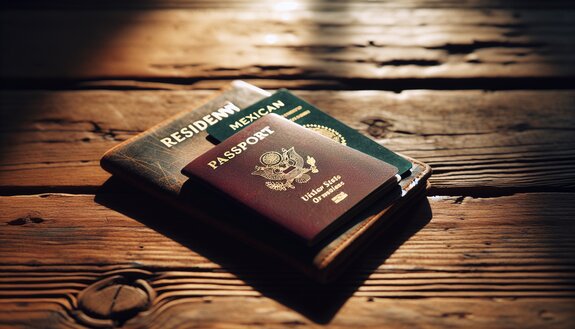
Last week a gunman shot a Canadian tourist at Teotihuacán. One person killed, thirteen wounded, shooter dead at the scene.
Within hours, my phone was doing the thing it always does when something violent happens in Mexico. The posts started rolling in. A lot of Americans who’d been planning trips suddenly weren’t planning trips anymore. The comments sections went exactly where you’d expect them to go.
On one side: “This is why I don’t go to Mexico. So dangerous. Prayers for the family.” People who’ve never been south of San Diego, citing this as confirmation of everything they already believed. On the other side, Mexican nationalists and nationalist-adjacent expat contrarians firing back: “Stay home then. We don’t want you here anyway. Just your money.”
Both sides completely missed the point.
The first group is running on media-manufactured fear that treats every violent incident in Mexico as evidence of a uniquely dangerous country — while the United States recorded 499 mass shootings in 2024 alone, roughly one every seventeen hours, and nobody is posting “this is why I don’t go to America.” The second group is doing that infuriating thing where national pride substitutes for actual engagement with the question, which is a real one that real people living here deserve a real answer to.
So let’s actually look at the data.
What it shows is more complicated than either side wants. Mexico has a genuine violence problem. It’s also heavily concentrated, demographically specific, and geographically predictable in ways the headline numbers completely obscure. For a non-gang-involved American living in or visiting Baja, the honest risk picture is meaningfully different from what the Facebook comments imply — and I can show you exactly why.
What Actually Happened at Teotihuacán
Start with the incident that triggered this conversation, because the facts matter.
On April 20, 2026, a lone gunman climbed the Pyramid of the Moon inside the Teotihuacán archaeological zone. He fired a warning shot, briefly held tourists on the upper platform, then opened fire on people descending the stairs. One Canadian woman was killed. Thirteen others were wounded — Americans, Colombians, Brazilians, a Russian, another Canadian.
The shooter was Julio César Jasso Ramírez, 27, a Mexican national from Guerrero living in Mexico City. He carried a .38 Special revolver, 50+ rounds, and a backpack containing literature and images associated with the True Crime Community subculture that glorifies Columbine. He was wearing a black t-shirt reading “Disconnect and Self-Destruct.” He carried an AI-generated image of himself posed alongside Eric Harris and Dylan Klebold.
The attack fell on the 27th anniversary of Columbine.
Authorities including Mexico’s Security Secretary Omar García Harfuch and President Sheinbaum explicitly ruled out cartel or organized crime involvement. This was a premeditated copycat mass attack by a mentally disturbed individual. 1 2
What the headlines said
- "Tourist shot dead in Mexico"
- "Violence strikes iconic Mexican landmark"
- "Mexico travel warning renewed after attack"
- Comments: "This is why I don't go to Mexico"
What actually happened
- Columbine copycat attack on Columbine's 27th anniversary
- Lone shooter with no cartel affiliation
- Explicitly ruled out as organized crime
- The type of attack the US sees hundreds of times per year
That’s the first problem with how this story got covered. The framing was “Mexico violence kills tourist.” The accurate framing is “Columbine-inspired mass shooter attacked a World Heritage site.” Those are not the same story, and the difference matters enormously for anyone trying to make rational decisions about risk.
Mexico’s Homicide Numbers, Read Honestly
Here’s where I’m going to do something the panic posts never do: give you the real numbers, including the ones that don’t flatter Mexico.
Mexico’s national homicide rate in 2025 was approximately 17.5 per 100,000, based on preliminary SESNSP data showing 23,374 killings — the lowest count in a decade. The 2024 rate was roughly 19.3 per 100,000. Sheinbaum’s government is reporting a 45% decline from 2024’s peak to Q1 2026, though independent analysts at InSight Crime urge caution about these numbers given reclassification concerns. 3 4
The US national homicide rate in 2024 was approximately 5.0 per 100,000, on pace for roughly 4.0 in 2025. 5
So Mexico’s rate is roughly 3.5 to 4 times higher than the United States. That’s real. Don’t wave it away.
But that number is nearly useless without context, because of two structural facts that every serious analyst agrees on.
First: Mexican homicide is overwhelmingly organized-crime driven. The Mexico Peace Index, Human Rights Watch, InSight Crime, and the Wilson Center all converge on the same estimate: between 60 and 75% of Mexican homicides are committed by organized crime groups — cartel vs. cartel, dealer vs. dealer, recruitment enforcement, territorial disputes. Victims are 88 to 90% male, disproportionately ages 20–39, and concentrated among people actively engaged in the criminal economy. 6 7
In the United States, gang-related homicides account for roughly 10 to 13% of total killings. The rest are intimate-partner violence, family disputes, acquaintance conflicts, robbery — broadly distributed across the population. Mexico’s violence is more tightly coiled around a criminal economy than America’s is. That’s not comfort food. It just means the distributional risk for someone outside that economy looks different than the national rate implies.
Second: geographic concentration is extreme. More than half of Mexico’s homicides occur in just 50 of approximately 2,500 municipalities. Seven states account for over half of all 2025 killings. Yucatán’s homicide rate is 1.8 per 100,000 — lower than Canada’s. Mexico City’s rate is around 9 per 100,000, lower than St. Louis, Baltimore, Memphis, New Orleans, Detroit, or Washington DC. 6 8
| Indicator | Mexico | United States |
|---|---|---|
| National homicide rate (2024–25) | 17.5–19.3 per 100,000 | 4.0–5.0 per 100,000 |
| Organized crime / gang share of homicides | ~60–75% | ~10–13% |
| Victim sex | 88–90% male | ~78% male |
| Municipalities with fewer than 5 homicides (2023) | ~1,750 of 2,500 | N/A |
| Share of homicides in top 50 municipalities | More than half | N/A |
| Mass shootings (2024) | Rare — counted in low dozens | 499 (Gun Violence Archive) |
The Baja Split: Tijuana vs. Everyone Else
This is the section that actually matters for people living here. And I’m going to be straight with you, because sugarcoating it doesn’t help anyone.
Baja California — the state — is genuinely one of Mexico’s most violent. State-level homicides in 2024 were approximately 2,450, producing a rate around 65 per 100,000. That placed BC among the three most violent states in Mexico. 10
The 2025 numbers are significantly better. The state recorded 1,757 homicides, a 27% drop. 11
But here’s the thing the state-level number obscures: Tijuana is doing most of the work. Tijuana alone accounted for 76% of all intentional homicides in Baja California in 2024. 12 The state’s “violence problem” is largely Tijuana’s violence problem — a Sinaloa Cartel vs. CJNG territorial war concentrated in specific eastern and central colonias.
Tijuana in 2024 had a rate around 118 per 100,000 — genuinely among the worst in the hemisphere. It fell to an annualized rate around 53 per 100,000 in 2025, which is roughly comparable to St. Louis. That’s still bad. The blog won’t pretend otherwise.
Ensenada is a different story. Homicides peaked when Ensenada ranked as Mexico’s 6th most dangerous municipality in 2020. By 2025, it had fallen to 41st. The first four months of 2025 saw 26 homicides compared to 50 in the same period of 2024. Mayor Claudia Agatón Muñiz confirmed the roughly 50% decline. 13 The current rate — around 44 per 100,000 — is comparable to Baltimore. Serious, but not uniquely dangerous by North American urban standards. And it’s still falling.
Baja California Sur — Los Cabos, La Paz, Todos Santos — has done a complete reversal from its horrific 2017 peak, when Los Cabos briefly ranked as the most violent city in the world during Sinaloa fragmentation post-El Chapo. The state now ranks among the two or three safest in Mexico, with a rate around 2 to 10 per 100,000. Los Cabos recorded two homicides and zero kidnappings in January 2025. The US State Department’s travel advisory for Baja California Sur is Level 2 — the same rating as France, Germany, and the United Kingdom. 14
Americans Actually Dying in Mexico
Let’s look at what the State Department’s own death statistics show, because this is where the fear narrative really falls apart.
Roughly 60 Americans are murdered in Mexico per year, against tens of millions of annual visits. Two-thirds of American non-natural deaths in Mexico aren’t homicides at all — they’re accidents, primarily vehicle crashes and drownings. Of those ~60 homicides, 68% occur in just the six northern border states. Beach destinations — the places most Americans actually visit — recorded a combined total of 7 American homicides over two full years (2021–22). That’s across all of Quintana Roo (Cancún, Tulum, Playa del Carmen), all of Jalisco (Puerto Vallarta), all of Oaxaca. Multiple major tourist cities had zero American homicides in 2022. 15 16
That comparison needs a caveat. Visitor-days and resident-years aren’t the same metric. American homicide victims in Mexico also skew heavily toward dual nationals with family or business ties in high-risk zones, not leisure tourists. So the “20 times safer” framing oversimplifies. But the directional conclusion is solid: a leisure tourist or long-term expat in a tourist-corridor community faces a statistically tiny risk of being murdered.
| Region | American homicides (2021–22) | Share of total |
|---|---|---|
| Six northern border states (incl. Tijuana / BC) | ~82 | 68% |
| Quintana Roo (Cancún / Tulum / Playa) | 5 | 4% |
| Jalisco (Puerto Vallarta) | 2 | 2% |
| Oaxaca, Mérida, San Miguel, Querétaro, Mexico City | 0 | 0% |
Who Actually Gets Killed — and the Behaviors That Create Real Risk
Security analysts who work this space are remarkably consistent about the victim profile. Among the roughly 60 Americans murdered annually in Mexico, most are dual nationals with ties to border-zone communities — many of them with at least some degree of involvement in the same illicit economy that’s generating the violence. Mike Ackerman of the Ackerman Group, a security consultancy: “Most of the drug-trade crime within Mexico is narco-on-narco violence or violence against police. Kidnapping almost always targets wealthy Mexicans, not Americans or other foreigners.” 17
The handful of tourist homicides that do happen tend to cluster around specific, documentable behaviors. Tulum and Playa del Carmen keep appearing in the data — and the recurring factor isn’t the tourist corridor itself, it’s drug purchases from local dealers, which inserts buyers directly into the cartel retail chain where disputes get settled violently. The Ensenada surfer killings in April 2024 — the case that generated enormous US press — were a carjacking for truck tires in a remote coastal area, not a cartel hit on tourists. Four arrests were made. One woman was sentenced to 20 years in November 2025. 18
The behaviors that actually create risk are specific and avoidable.
🚫 Buy drugs from local dealers
This is the single most reliable way to insert yourself into the cartel retail chain. Tulum and Playa del Carmen tourist killings recur for this reason. It's not random. It's a supply-chain dispute you walked into.
🚫 Hail street taxis at night
Express kidnapping — being held for 1–3 days while your captors drain your ATM — is a real crime in Mexican cities and street taxis are the primary vector. Didi and Uber exist. Use them.
🚫 Drive between cities at night
Night driving on Mexican highways significantly elevates risk — checkpoints, robbery, and accidents on unlit roads. Leave in the morning and arrive before dark.
🚫 Camp in remote coastal areas alone
The Ensenada surfers were killed in a remote spot with no other people around. Remote coastal Baja is beautiful. It's also where you're invisible to anyone who might help if something goes wrong.
🚫 Travel overland through Level 4 states
Tamaulipas. Colima. Guerrero. Michoacán. If you're crossing into these states by road for medical tourism or family visits, you're taking a meaningfully different level of risk than Baja expat life involves.
✓ Use app-based transport
Didi and Uber are active in Ensenada and Tijuana. Didi is the bigger player in Mexico and — unlike some competitors — actually pays Mexican taxes, so it's the preferred option. Your ride is GPS-tracked, the driver is identified, and you have a digital record of the trip. Use them, especially at night.
✓ Stay in established neighborhoods
Tijuana's violence is concentrated in specific colonias — Sánchez Taboada, Camino Verde, Tres de Octubre. Zona Río, Playas de Tijuana, Chapultepec, and Ensenada's tourist core operate at fundamentally different risk levels.
✓ Be aware after dark
Most violent incidents in Mexican cities happen late at night in entertainment zones. Having a couple of drinks at a restaurant in Ensenada isn't the same risk profile as stumbling around alone at 2am in an unfamiliar neighborhood.
How the Media Gets This Wrong
The coverage pattern is consistent and documented. Individual incidents in Mexico generate wall-to-wall US coverage with no baseline comparison. The Matamoros kidnapping in March 2023 — a real and horrifying Gulf Cartel mistaken-identity attack that killed two Americans and wounded two others — prompted Texas DPS to warn against travel to all of Mexico. A country of 130 million people. Because of an incident in Tamaulipas, which has been Level 4 for years for documented reasons, and which is not remotely comparable to Baja. 19
Harvard researcher Viridiana Ríos found in peer-reviewed work that increased US media coverage of cartel violence is actually associated with more public cartel brutality — because reputational violence is a signaling tool cartels use to establish market dominance, and US media attention amplifies that signal. The coverage isn’t just inaccurate. It actively makes things worse. 20
A Wilson Center survey found that 57% of Americans believe Mexico is “overcome by drug trafficking and controlled by a corrupt government.” People who live near the border — who should have more accurate information — score worse on this measure, at 64%. Proximity to local sensational coverage correlates with worse perception, not better accuracy. 21
How US media frames it
- "Tourist shot dead in Mexico" — no mention of Columbine-copycat context
- "Violence at iconic Mexican landmark" — no mention of 499 US mass shootings in 2024
- Matamoros kidnapping → warning against travel to all of Mexico
- Tulum shooting → ongoing Mexico travel danger narrative
- Level 2 advisory (same as France) never mentioned
What the data says
- ~60 American homicides/year in Mexico against tens of millions of visits
- Most at-risk: dual nationals with border-zone ties, not leisure tourists
- Beach destinations: 7 American homicides total over 2 years
- Multiple major tourist cities: zero American homicides in 2022
- US domestic murder rate is ~20× the visitor homicide rate in Mexico
The “this is why I don’t go to Mexico” comments after Teotihuacán are coming from people whose primary information source is individual incidents filtered through a media ecosystem that has structural incentives to frame them as maximally alarming. That’s not Mexico being uniquely dangerous. That’s a fear narrative doing what fear narratives do.
The nationalists firing back with “stay home then” aren’t wrong about the underlying frustration. But they’re not helping anyone make a better decision, either. The question deserves a straight answer.
So How Safe Is Baja, Actually?
Here’s the honest answer, without cheerleading.
Tijuana is genuinely violent in raw terms. Its 2024 homicide rate exceeded the worst US cities. Its 2025 rate is trending toward St. Louis. That’s not a place where you wave away the numbers with “it’s all cartels.” It’s a city with a real problem, and the 15% of Tijuana’s violence that isn’t targeted organized crime — extortion, robbery, random conflict — affects real people who aren’t cartel-involved. Tijuana deserves honest acknowledgment, not dismissal.
Ensenada is a different picture. The rate has fallen by roughly half since 2020. It’s now comparable to Baltimore — a city millions of Americans live in, visit, and work in without spending much time thinking about their personal safety. The violence that does happen in Ensenada is predominantly cartel-adjacent and geographically concentrated away from the expat and tourist corridors. It is not a random threat.
Baja California Sur is among the safest places in North America. Level 2. Same as France.
For a non-gang-involved American civilian living the typical Baja expat life — an established neighborhood, app-based transport at night, no drug purchases from local dealers, no overland travel through Level 4 states — the random violence risk in Ensenada, Valle de Guadalupe, Rosarito’s tourist corridor, La Paz, or Los Cabos is plausibly lower than in St. Louis, Baltimore, Memphis, Detroit, or New Orleans. That argument is supported by the distributional data on who actually gets killed.
One honest limitation: no peer-reviewed study has directly compared “civilian non-participant homicide risk” across Mexico and the United States using equivalent methodology. The argument rests on the distributional structure of Mexican homicide — who gets killed and why — not a direct rate comparison. And the ongoing cartel-fragmentation dynamics following El Mayo Zambada’s July 2024 arrest create real uncertainty about Baja’s trajectory in 2026 and 2027. These aren’t numbers you set and forget.
The Teotihuacán attack was terrible. The Canadian woman who was killed deserved better. Her family deserves sympathy, not a geopolitical argument.
But the attack was a Columbine copycat. It was about American-style mass-shooter ideology, not Mexican cartel violence. The comments sections that used it as evidence that Mexico is uniquely dangerous are using the wrong data to reach a predetermined conclusion — while the US manages 499 of those mass shooting events per year, and nobody posts “this is why I don’t go to America.”
Both countries have real violence problems. Both deserve honest accounting. The math doesn’t lie when you actually look at it.
Sources
Share on
Bluesky Twitter Facebook LinkedInComments are configured with provider: disqus, but are disabled in non-production environments.